Injecting Energy: When to Use the Magic Party Font
There is a specific moment in the design process where you need to stop taking yourself so seriously. You have the clean sans serif for the body copy, the elegant serif for the headers, and the muted color palette that screams "corporate stability." But then, the brief shifts. You are designing a flyer for a neighborhood block party, a header for a summer camp brochure, or a logo for a children’s clothing line. Suddenly, the Swiss-style grid feels suffocating. You need a typeface that smiles.
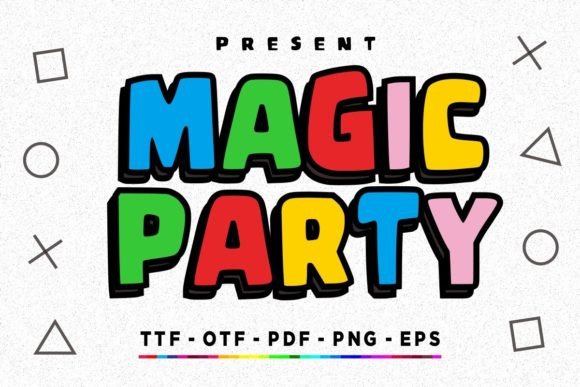
Enter Magic Party. This is not a font that whispers; it shouts with a grin. As a colorful, bold, and distinctively childish display font, it occupies a very specific niche in the typographic world. It conveys an impeccable friendliness that is difficult to manufacture with standard geometric typefaces. If you view fonts as having personalities, Magic Party is the one wearing the oversized sunglasses and holding a balloon. It is designed to be the life of the party, quite literally.
Understanding the "Color Font" Revolution
Before diving into the creative applications, it is crucial to understand the technical DNA of this typeface. Magic Party is an OpenType-SVG color font. For designers accustomed to standard monochrome vector fonts, this is a significant shift. Traditional fonts are essentially single-color vector shapes; you apply a color to the whole glyph. An SVG font, however, embeds a full graphic within the font file itself.
This means that when you type "Happy Birthday" using Magic Party, the letters are not just outlines to be filled. They arrive pre-rendered with gradients, textures, and multiple colors—likely a vibrant mix of pastels and bold primaries. This technology allows for a level of detail that standard vector fonts cannot achieve, such as 3D effects or texture variations within a single letter.
However, this comes with a technical caveat that every creative professional must heed: compatibility. Because SVG fonts are complex, they behave differently than standard files. Magic Party functions beautifully in professional design software like Adobe Photoshop, Adobe Illustrator, Silhouette, and Inkscape. It is a powerhouse for digital design and high-quality print work. However, if your workflow relies heavily on Cricut machines for cutting vinyl or paper, standard OTF or TTF versions of this specific product are not compatible. This is a vital consideration for crafters planning physical products.
Real-World Applications: Beyond the Birthday Card
While the name suggests celebration, the utility of a premium font like Magic Party extends far beyond party invitations. Its strength lies in "stop-ability"—the ability to stop a scrolling thumb or a wandering eye.
Digital Dominance and Social Media
In the realm of social media graphics, attention spans are non-existent. A bold, colorful display font acts as an immediate visual anchor. Consider using Magic Party for Instagram stories or YouTube thumbnails where the subject matter involves food, lifestyle, kids, or entertainment. The "childish" aesthetic isn't just for children; in modern branding, it often signals approachability and lack of pretension. It tells the audience, "We are fun, and we don't take ourselves too seriously."
Packaging and Product Design
If you are a small business owner launching a line of artisanal sweets, bath bombs, or party supplies, packaging design is your battleground. Magic Party works exceptionally well for product headers or flavor indicators. Imagine a donut box: the brand name might be in a clean sans serif, but the "Glazed" or "Sprinkled" labels could pop using Magic Party. The built-in color variations can match your product's icing or ingredients, creating a cohesive visual identity that jumps off the shelf.
Editorial and Web Design
Even in editorial design, there is room for play. If you are a blogger writing about parenting, DIY crafts, or event planning, using Magic Party for pull quotes or section headers can break up long blocks of text. It provides a visual "breather" for the reader. In web design, it is best used sparingly—perhaps for a landing page hero image or a 404 error page—to inject personality without sacrificing load times or readability.
The Art of the Pairing
One of the biggest mistakes designers make with display fonts is using them for everything. Magic Party is a display font, meaning it is designed for impact, not for reading long sentences. Using it for a paragraph of text would result in a headache for your reader.
The key to professional usage is font pairing. Because Magic Party is bold, colorful, and high-energy, it demands a grounding partner. You need a typeface that knows how to sit down and be quiet.
- The Clean Neutral: Pair Magic Party with a geometric sans serif font like Montserrat or Open Sans. The neutrality of the sans serif allows the colorful magic of the display font to shine without visual competition.
- The Textured Companion: If you want to lean into a handcrafted vibe, you might pair it with a legible handwritten font or script font—but ensure the script is much lighter in weight. If both are bold, the layout becomes chaotic.
- The Structured Contrast: Surprisingly, a rigid, monospaced font can look great next to Magic Party. The contrast between the structured code-like font and the whimsical SVG letters creates a modern, eclectic aesthetic.
Evaluating Fit and Brand Identity
Not every project is a party. Before you commit to Magic Party for a logo design or brand identity package, you need to conduct a "vibe check."
Ask yourself: Does the brand voice sound like this font looks? If you are designing for a law firm, a security company, or a luxury watch brand, Magic Party is entirely inappropriate. It undermines authority and seriousness. However, if you are branding a daycare, a toy store, a bakery, or a creative workshop, this font is a secret weapon. It instantly communicates the fun factor.
Furthermore, consider your audience demographics. While the font is "childish" in style, its primary consumers are adults (20–50) buying for children or seeking nostalgia. It appeals to the "kidult" market—the adults who buy LEGO sets and colorful sneakers. It taps into a sense of nostalgia and joy.
Practical Tips for Implementation
If you decide to integrate this creative font into your toolkit, here is how to do it effectively:
- Color Coordination: Since the SVG file comes with pre-baked colors, you need to ensure those specific colors don't clash violently with your background. Test the font on both light and dark backgrounds. Usually, these bold fonts pop best on white or very light grey backgrounds to let the colors breathe.
- Scaling: SVG fonts can sometimes lose their charm when scaled down too small, as the texture or gradients might become muddy. Use Magic Party at larger sizes—headlines, banners, and posters—where the details are visible.
- Licensing: Always review the commercial licensing. If you are creating merchandise (t-shirts, mugs) to sell, ensure the license covers the manufacturing of physical goods. Most premium font providers allow this, but it is your responsibility to verify.
Magic Party is more than just a collection of glyphs; it is a mood setter. It is a tool for visual communication that says "joy" louder than words ever could. When used with technical care and creative restraint, it transforms standard designs into memorable experiences. Whether you are crafting a digital invite or packaging a product, sometimes the best design choice is to simply invite the party in.